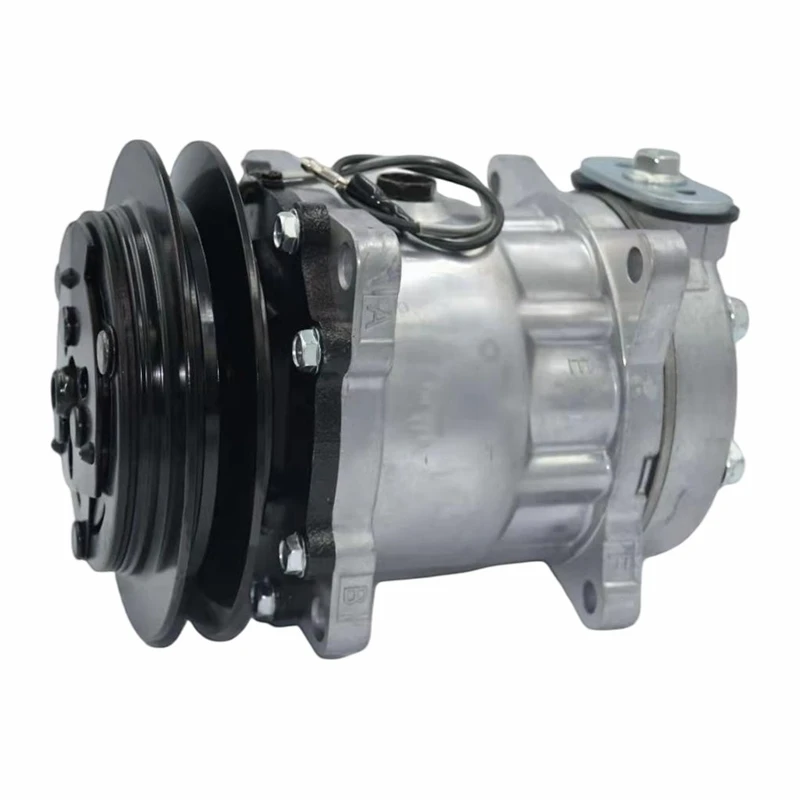
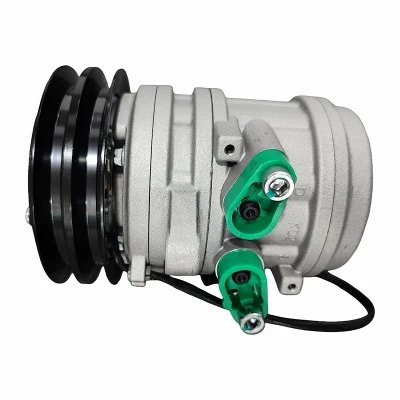
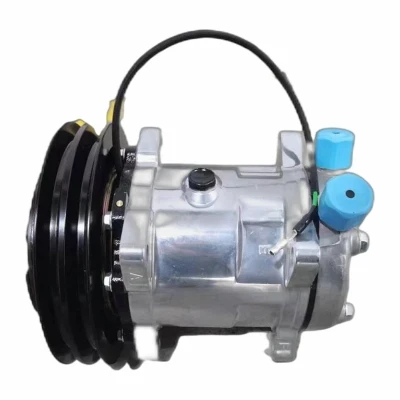
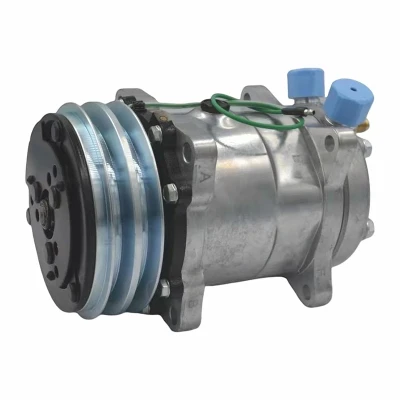
Swashplate compressors are structures that use a swashplate to drive a piston in reciprocating motion to compress refrigerant. They are widely used in residential and commercial air conditioning systems. During operation, they experience large internal pressure fluctuations, high refrigerant flow rates, and drastic temperature changes, placing extremely stringent requirements on the sealing of pipe connections. If the sealing ring material is too hard, lacks resilience, or has excessive dimensional tolerances, micro-leakage can easily occur during start-up and shutdown. Long-term accumulation can lead to refrigerant loss, decreased energy efficiency, and even abnormal compressor wear. Therefore, sealing rings matched to the characteristics of swashplate compressors must balance pressure resistance, low-temperature flexibility, and refrigerant compatibility (such as R22/R410A/R134A).
During refrigerant charging, each tightening of the charging hose connection is a real test of the sealing ring. Those who have used ordinary rubber gaskets may have encountered situations where, just two days after adding refrigerant, the pressure gauge reading quietly drops by one bar; or when working outdoors in winter, the gasket becomes brittle and cracks easily with a slight touch. This sealing ring is made of refrigerant-resistant EPDM rubber, with a smooth, burr-free surface. Its inner diameter precisely fits common refrigerant charging connectors, providing a tight, secure fit without wobbling. It maintains its elasticity even after more than five reinstallations and removals. Especially in scenarios with swashplate compressors that operate at high frequencies, it firmly protects the interface, ensuring the refrigerant stays within the system without escaping, mixing with other gases, or causing problems. Keeping a few on hand is like having an invisible shield for your air conditioning system.