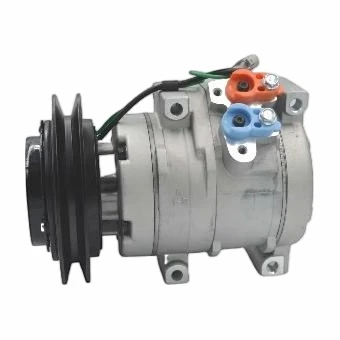
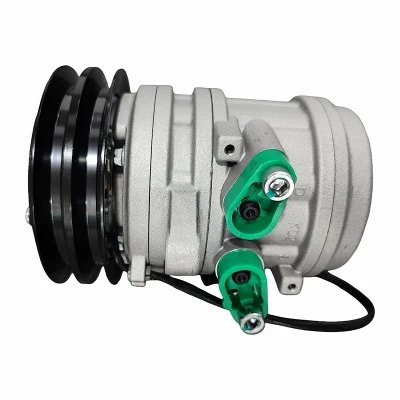
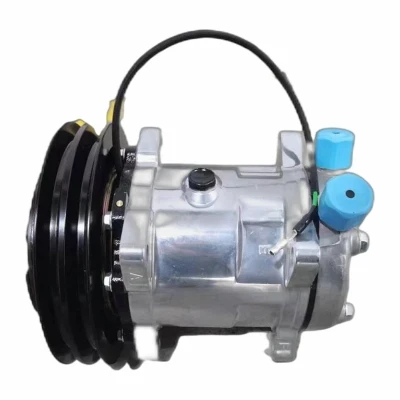
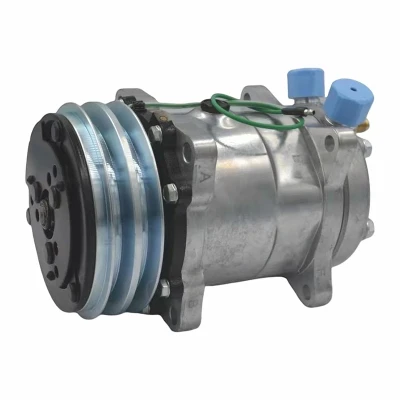
The shaft angle during the compression process of a swashplate compressor is typically around 20 degrees. This angle refers to the angle between the swashplate rotor and the drive shaft, and it has a significant impact on the compressor's performance. A reasonable shaft angle ensures compressor efficiency while achieving a more balanced ratio between the compressor's size and flow rate.
Swashplate Compressors and Shaft Angle
Swashplate compressors are a common type of compressor, primarily used in automotive air conditioning and other technical fields. During their operation, the shaft angle is a crucial parameter. This angle, the angle between the swashplate rotor and the drive shaft, is usually set at around 20 degrees. This setting is not arbitrary but rather the result of careful design and optimization, designed to ensure optimal compressor performance.
The Impact of Shaft Angle on Compressor Performance
The size of the shaft angle directly affects the compressor's performance. As the angle increases, the compressor's size and flow rate gradually decrease, but its efficiency gradually increases. This is because, with an increased angle, the swashplate rotor can more effectively push the piston to perform the compression action during rotation, thereby improving efficiency. However, this also reduces the internal space of the compressor, thus limiting the flow rate.
Conversely, when the shaft angle decreases, the compressor's volume and flow rate gradually increase, but its efficiency gradually decreases. This is because a smaller angle reduces the force generated by the swashplate rotor when pushing the piston, leading to lower efficiency. However, it also provides more internal space for the compressor, thereby increasing the flow rate.
Optimal Shaft Angle Design
Therefore, when designing a swashplate compressor, it is necessary to balance the relationship between volume, flow rate, and efficiency to determine the optimal shaft angle. Generally, an angle of around 20 degrees allows for a more reasonable ratio of volume and flow rate while ensuring compressor efficiency. This design not only enables the compressor to perform well in various operating environments but also helps extend its service life and reduce maintenance costs.
In conclusion, the shaft angle in the compression process of a swashplate compressor is a crucial parameter that significantly affects its performance. By designing and optimizing this angle appropriately, it is possible to ensure that the compressor operates efficiently while maintaining a reasonable volume and flow rate.