

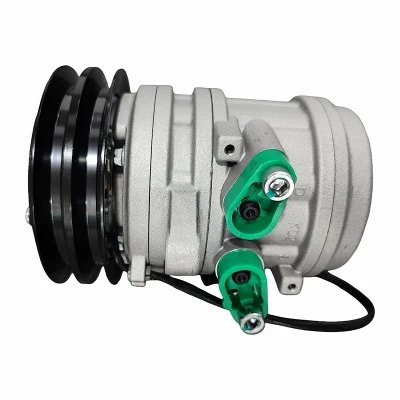
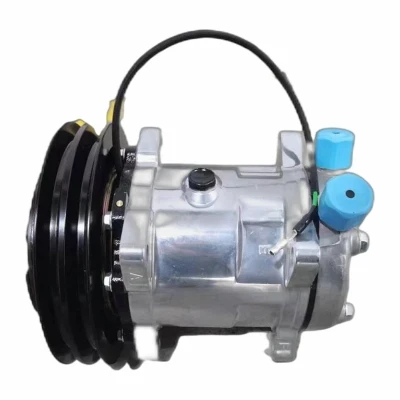
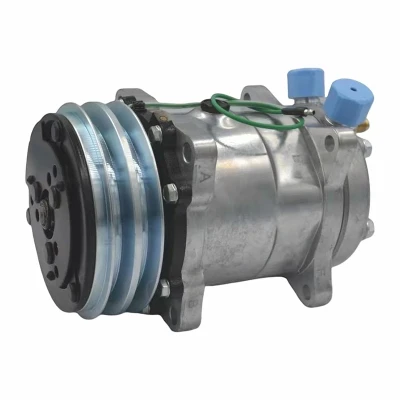
Based on structure and operating method, compressors are mainly classified into the following types:
Reciprocating Compressor
Structure: Compresses refrigerant by the reciprocating motion of a piston within a cylinder.
Advantages and Disadvantages: Low cost but high vibration; commonly found in older models; power range 1.5-5kW.
Rotary Compressor
Scroll Compressor: The stationary and moving scrolls mesh to form the compression chamber; low noise, long lifespan; mostly used in mid-to-high-end models (such as the Toyota Prius).
Vanilla Compressor: The eccentric rotation of the rotor drives vanes to compress the refrigerant; compact structure but faster wear.
Screw Compressor: Compresses refrigerant through the meshing of a screw rotor; suitable for large commercial vehicles; COP value can reach 3.5 (International Institute of Refrigeration data).
Electric Compressor
Characteristics: Directly driven by an electric motor, eliminating the need for engine belt drive; power 3-7kW (Bosch technical report); designed specifically for new energy vehicles.
Advantages: Can operate independently, supports precise temperature control, but higher cost.
Extended Comparison:
Energy Efficiency Ratio (COP): Electric compressors generally have a higher COP than mechanical compressors (electric average 2.8 vs. mechanical 2.2).
Market Trends: Global electric vehicle compressor penetration reached 24% in 2023 (Marklines data), and is projected to exceed 50% by 2030.