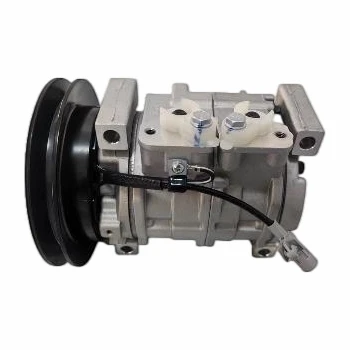
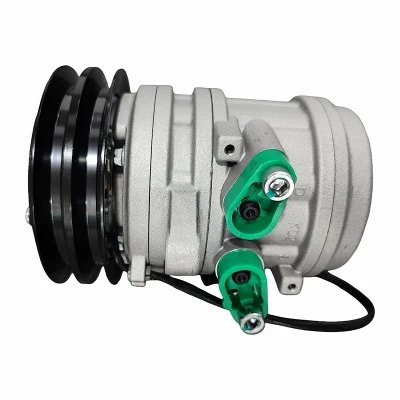
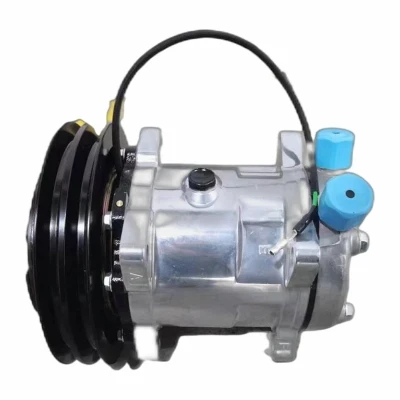
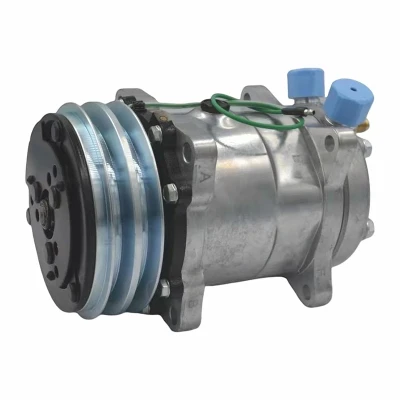
The Core Structure of a Swashplate Compressor
A swashplate compressor is like an elegant ballerina; its core component, the swashplate, is mounted at a specific angle on the main shaft. When the main shaft rotates, the swashplate drives the evenly distributed pistons in a reciprocating motion. This design cleverly converts rotational motion into linear motion, with the stroke of each piston within the cylinder determined by the swashplate's tilt angle. Its compact structure and few parts are its outstanding features.
The Four-Step Process of Gas Compression
Intake Stage: The piston moves outward, creating a low-pressure zone within the cylinder, and the intake valve opens to draw in gas.
Early Compression Stage: The piston begins its return stroke, the intake valve closes, and the gas is initially compressed.
High-Pressure Compression: The piston continues to advance, further reducing the gas volume, and the pressure continues to rise.
Exhaust Stage: After reaching the set pressure, the exhaust valve opens, and the high-pressure gas is discharged.
Applications and Unique Advantages
Swashplate compressors are widely used in automotive air conditioning, industrial refrigeration, and other fields. Their low-vibration design is particularly suitable for mobile equipment, offering high energy conversion efficiency and relatively simple maintenance. Compared to other compressors, it performs exceptionally well in the medium-pressure range, making it an ideal choice for many systems