

Hey there! As a supplier of tractor compressors, I've often been asked if a tractor compressor can be used for water treatment. It's a pretty interesting question, and today, I'm gonna dive deep into this topic to share some insights.
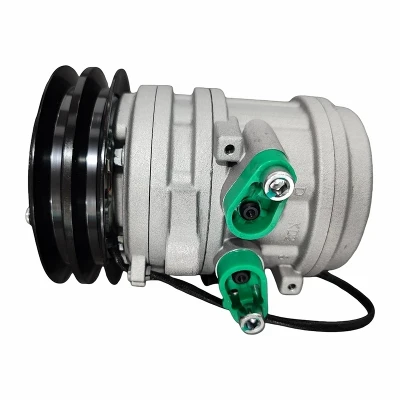
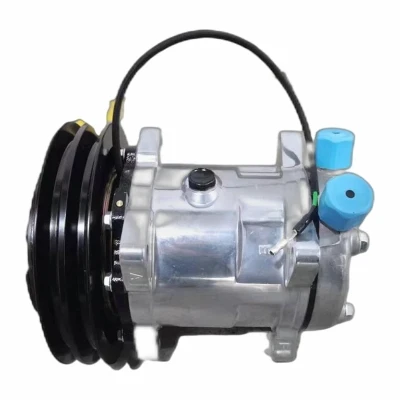
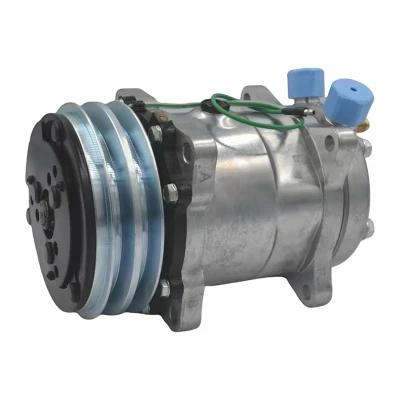
First off, let's talk about what a tractor compressor is. A tractor compressor is a type of compressor that's designed to be used in tractors and other agricultural machinery. It plays a crucial role in powering various systems in these machines, like the air conditioning system, pneumatic tools, etc. You can check out different types of compressors for agricultural machinery on our website, such as Agricultural Machinery AC Compressor, Agricultural Machinery Compressor, Agricultural Machinery Cab AC Compressor, Agricultural Machinery Refrigeration Compressor, and Special Compressor for Agricultural Machinery.
Now, let's get to the main question: Can a tractor compressor be used for water treatment? Well, the short answer is yes, but it's not that straightforward.
How Tractor Compressors Could Potentially Be Used in Water Treatment
Aeration
One of the key processes in water treatment is aeration. Aeration is all about adding oxygen to water. This helps in several ways. It can remove unpleasant odors and tastes from the water, and it's also crucial for biological treatment processes where bacteria need oxygen to break down organic matter in the water.
A tractor compressor can be used to supply compressed air for aeration systems. In a water treatment plant, the compressed air can be pumped into the water through diffusers. These diffusers create small bubbles, which then rise through the water, transferring oxygen from the air to the water. The advantage of using a tractor compressor for this is that it's often a robust and reliable piece of equipment. Tractors operate in tough agricultural environments, so their compressors are built to withstand high stress and harsh conditions. This means that in a water treatment setting, they can potentially provide a long - lasting and consistent source of compressed air.
Mixing and Agitation
Another aspect of water treatment is mixing and agitation. In some treatment processes, it's important to ensure that chemicals are evenly distributed throughout the water, or that solids are kept in suspension. A tractor compressor can be used to power pneumatic mixers or agitators. The compressed air can be used to drive the movement of these devices, creating turbulence in the water and ensuring proper mixing.
Challenges of Using Tractor Compressors in Water Treatment
Contamination
One of the major challenges is contamination. Tractor compressors are typically used in agricultural settings where there's a lot of dust, dirt, and other debris. If these contaminants are carried into the water treatment system, they can cause problems. For example, dust and dirt can clog filters in the water treatment plant, reducing their efficiency and increasing maintenance costs. Also, any oils or lubricants from the compressor can contaminate the water, which is a big no - no in water treatment.
To overcome this issue, proper filtration and air treatment systems need to be installed between the compressor and the water treatment process. These systems can remove contaminants from the compressed air, ensuring that only clean, dry air is introduced into the water.
Compatibility with Water Treatment Requirements
Water treatment processes often have specific requirements for the quality and quantity of compressed air. For example, the pressure and flow rate of the compressed air need to be carefully controlled to ensure efficient aeration or mixing. Tractor compressors may not always be able to provide the exact specifications required. They are designed for the needs of tractors, which may be different from the needs of a water treatment plant.
To address this, it may be necessary to modify the tractor compressor or use additional equipment to adjust the pressure and flow rate of the compressed air. This can add to the cost and complexity of using a tractor compressor in water treatment.
Cost - Benefit Analysis
When considering using a tractor compressor for water treatment, it's important to do a cost - benefit analysis.
On the cost side, there are several factors. First, there's the initial cost of the tractor compressor. If you already own a tractor with a compressor, the cost may be relatively low, as you're just repurposing existing equipment. However, if you need to buy a new compressor specifically for water treatment, there will be a significant upfront cost.
Then, there are the costs associated with modifying the compressor and installing additional equipment to address the challenges mentioned above. For example, the cost of filtration systems and pressure - regulating devices can add up.
On the benefit side, if the tractor compressor can be used effectively in water treatment, it can provide a cost - effective alternative to traditional water treatment compressors. Tractor compressors are often less expensive than heavy - duty industrial compressors designed specifically for water treatment. Also, they can be more readily available in rural areas where water treatment may be needed on a smaller scale, such as in agricultural communities.


Real - World Examples
There are some cases where tractor compressors have been used successfully in water treatment in small - scale applications. For example, in some rural farms, a tractor compressor may be used to aerate a small pond or tank of water used for irrigation. This can help improve the quality of the water and prevent the growth of harmful organisms.
However, for large - scale water treatment plants, the use of tractor compressors is less common. These plants typically require more precise control over the compressed air supply and may have stricter requirements for air quality, so they usually opt for industrial - grade compressors designed specifically for water treatment.
Conclusion
So, can a tractor compressor be used for water treatment? The answer is that it's possible, but there are some challenges that need to be overcome. With proper filtration, modification, and control, a tractor compressor can be a viable option for certain water treatment applications, especially in small - scale or rural settings.
If you're considering using a tractor compressor for water treatment or are interested in our range of tractor compressors for other agricultural machinery applications, I encourage you to get in touch with us. We can discuss your specific needs and provide you with more information on how our compressors can fit into your operations. Let's have a chat and see if we can work together to find the best solution for you!
References
- "Water Treatment Principles and Design" by David W. Hendricks, George Tchobanoglous, and Franklin L. Burton.
- "Compressed Air Systems: Operation and Maintenance" by various industry experts.