

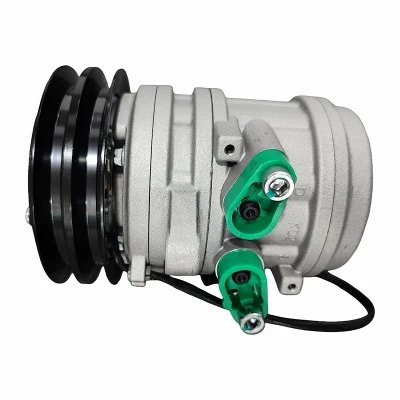
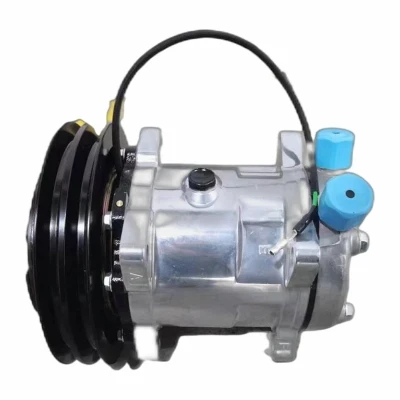
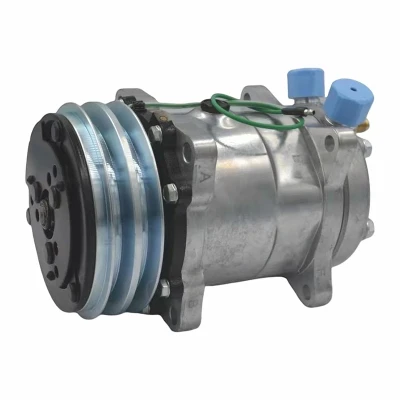
The car compressor is the "heart" of the air conditioning system, transferring heat by compressing the refrigerant. Its operation can be divided into four steps:
Intake Stage: Low-temperature, low-pressure gaseous refrigerant (such as R134a or R1234yf) is drawn into the compressor from the evaporator. The temperature is typically 0-10℃, and the pressure is approximately 2-3 bar (data source: SAE J2766 standard).
Compression Stage: Mechanical structures such as pistons or scrolls compress the refrigerant to a high-temperature, high-pressure state (70-80℃, 15-20 bar). At this time, the refrigerant carries the heat absorbed by the evaporator from the vehicle's interior.
Exhaust Stage: The high-pressure gas enters the condenser and is cooled and liquefied by the cooling fan.
Expansion Stage: The liquid refrigerant experiences a sudden pressure drop after being throttled by the expansion valve and re-enters the evaporator to absorb heat, completing the cycle.
Key Point: Compressor efficiency directly affects cooling performance. For example, the volumetric efficiency of a scroll compressor can reach over 95% (Automotive Air Conditioning Technical Handbook), while traditional reciprocating compressors only achieve 80%-85%.