

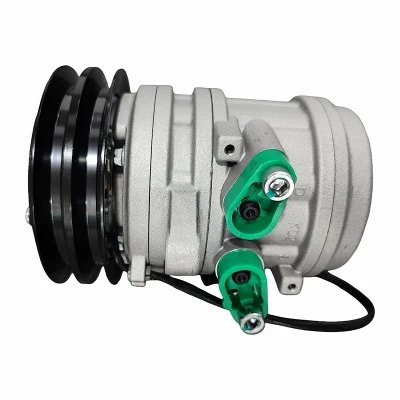
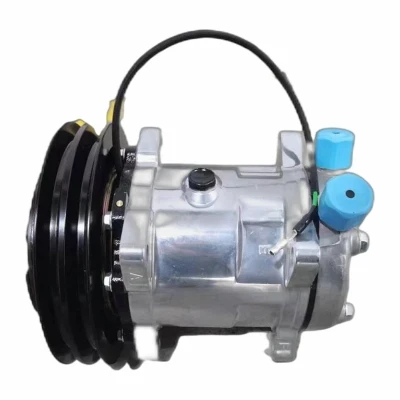
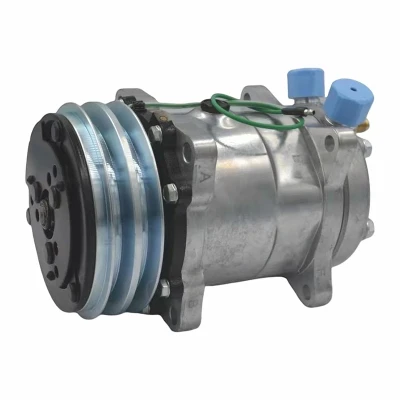
The automotive air conditioning compressor is the heart of the automotive air conditioning refrigeration system, responsible for compressing and transporting refrigerant.
The compressor has two important functions:
1. Creating a low-pressure condition within the system. (This allows gaseous refrigerant from the evaporator to enter the compressor.)
2. Compressing the gaseous refrigerant from low pressure to high pressure and raising its temperature.
What are the differences between fixed displacement and variable displacement air conditioning compressors? Displacement refers to the total volume of space traversed by the piston during its reciprocating motion within the cylinder.
1. The displacement of a fixed displacement air conditioning compressor increases proportionally with engine speed. It cannot automatically adjust its power output according to cooling demand and has a significant impact on engine fuel consumption. Its control is generally achieved by collecting the temperature signal from the evaporator outlet. When the set temperature is reached, the compressor stops working; when the temperature rises, the compressor starts working. Fixed displacement compressors are also controlled by the air conditioning system pressure; when the pressure in the pipeline is too high, the compressor stops working.
2. Variable displacement air conditioner compressors can automatically adjust their power output based on the set temperature. The air conditioning control system does not collect the temperature signal from the evaporator outlet; instead, it controls the compressor's compression ratio based on pressure changes within the air conditioning piping, thereby automatically adjusting the outlet temperature.
Throughout the cooling process, the air conditioner compressor is always operating, and the adjustment of cooling intensity relies entirely on the pressure regulating valve installed inside the compressor. When the pressure at the high-pressure end of the air conditioning piping is too high, the pressure regulating valve shortens the piston stroke within the compressor to reduce the compression ratio, thus decreasing the cooling intensity. When the high-pressure end pressure drops to a certain level and the low-pressure end pressure rises to a certain level, the pressure regulating valve increases the piston stroke to increase the cooling intensity.