

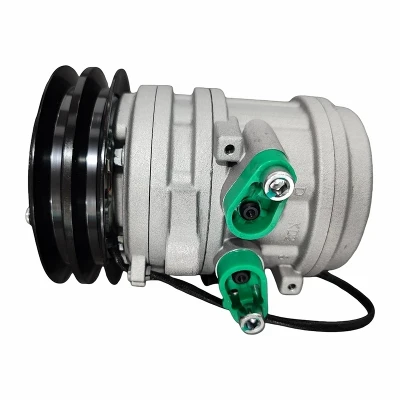
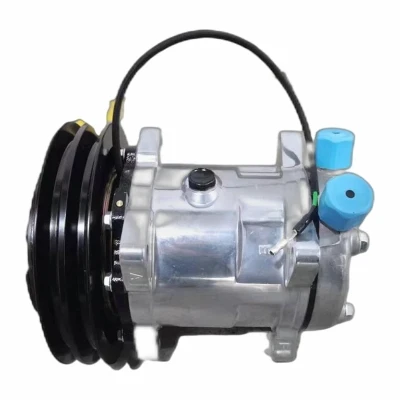
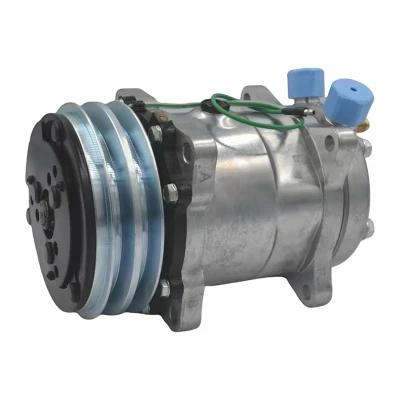
Hey there, folks! I'm a supplier of compressors for automobiles, and I've been getting a bunch of questions lately about whether these car compressors can be used for other purposes. So, I thought I'd dive into this topic and share my thoughts.
First off, let's talk a bit about the types of compressors we deal with in the automotive world. There are several kinds, like the Externally Controlled Variable Displacement Compressor. This type is pretty cool because it can adjust its displacement based on the cooling demand. It's super efficient and helps save energy in cars. Then there's the Fixed Displacement Compressor. As the name suggests, its displacement is fixed, which means it always pumps out the same amount of refrigerant. It's a more straightforward design and has been around for a long time.
We also have the Swash Plate Type Compressor and the closely related Swash Plate Ac Compressor. These compressors use a swash plate mechanism to convert rotational motion into reciprocating motion, which is how they compress the refrigerant. And the Variable Displacement Swash Plate Compressor combines the swash plate design with variable displacement technology, giving you the best of both worlds.
Now, back to the main question: Can these automotive compressors be used for other purposes? Well, the short answer is yes, but there are some things to consider.
One of the most common alternative uses is in small-scale refrigeration systems. For example, if you have a small walk-in cooler or a refrigerated display case in a convenience store, an automotive compressor could potentially do the job. The advantage here is that automotive compressors are relatively compact and can be easily integrated into these smaller systems. They're also designed to work under varying conditions, which is useful in refrigeration applications where the load can change depending on the temperature outside and the amount of product in the cooler.
However, there are a few challenges. Automotive compressors are typically designed to work with a specific type of refrigerant, like R-134a. In some refrigeration applications, you might need to use a different refrigerant, which could require some modifications to the compressor or the entire system. Also, the operating pressures and temperatures in a car's air conditioning system are different from those in a refrigeration system. So, you'd need to make sure the compressor can handle the new conditions.


Another possible use is in pneumatic systems. Some automotive compressors can be used to generate compressed air for small pneumatic tools or equipment. For instance, you could use a compressor to power a nail gun or a small airbrush. But again, there are some issues to deal with. Automotive compressors are usually designed to work continuously for short periods, like when you're driving your car. In a pneumatic system, you might need the compressor to run for longer periods, which could lead to overheating and premature wear.
Let's also talk about the cost factor. Using an automotive compressor for other purposes can be cost-effective, especially if you can get a used compressor at a low price. But you need to factor in the cost of any modifications or additional components you might need to make the compressor work in the new application. You also need to consider the long-term reliability and maintenance costs. If the compressor fails prematurely or requires frequent repairs, it might end up costing you more in the long run.
In terms of performance, automotive compressors are optimized for the specific requirements of a car's air conditioning system. When you use them for other purposes, you might not get the same level of performance. For example, the cooling capacity of an automotive compressor might not be sufficient for a large refrigeration system. Or, the compressed air output might not be consistent enough for some pneumatic tools.
So, while it's possible to use an automotive compressor for other purposes, it's not always a straightforward solution. You need to carefully evaluate the requirements of the new application and make sure the compressor can meet them. You might also need to consult with a professional who has experience in both automotive and non-automotive compressor applications.
If you're interested in exploring the possibility of using our automotive compressors for other purposes, or if you have any questions about our products, feel free to reach out. We're here to help you find the best solution for your needs. Whether it's for a small refrigeration project or a pneumatic system, we can provide you with the right compressor and offer advice on how to make it work in your application. So, don't hesitate to contact us and start a discussion about your procurement needs.
References
- General knowledge about automotive compressors and their applications in the industry.
- Technical specifications and manuals of the automotive compressors we supply.