

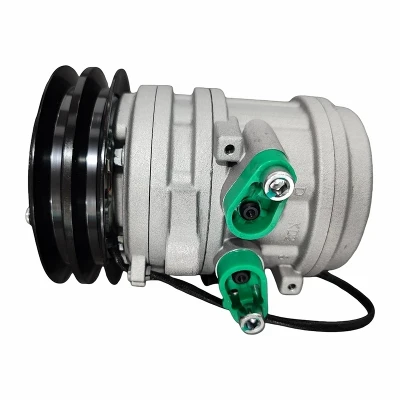
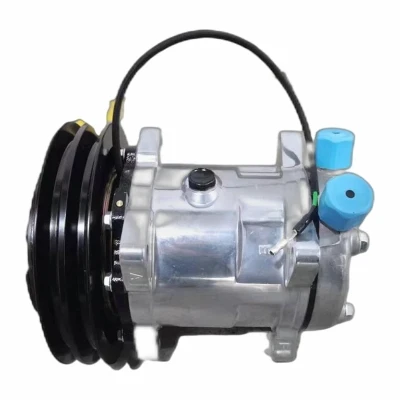
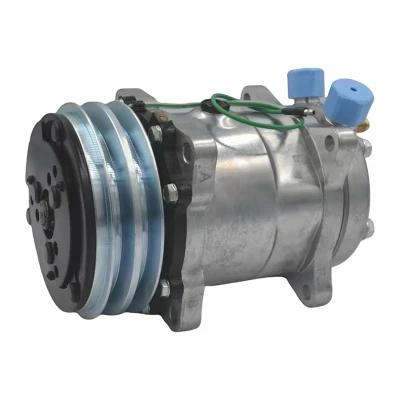
As a supplier of Fixed Displacement Compressors, I've witnessed firsthand the intricate relationship between valve design and compressor performance. In this blog, I'll delve into how the valve design in a fixed displacement compressor impacts its efficiency, reliability, and overall functionality.
The Basics of Fixed Displacement Compressors
Before we explore the role of valve design, let's briefly understand what a Fixed Displacement Compressor is. A fixed displacement compressor is a type of compressor where the displacement volume remains constant regardless of the operating conditions. This means that the compressor always pumps the same amount of refrigerant or air with each cycle. These compressors are commonly used in automotive air conditioning systems, industrial applications, and refrigeration units.
The Role of Valves in Compressors
Valves play a crucial role in the operation of a compressor. They control the flow of refrigerant or air into and out of the compressor cylinders, ensuring that the compression process is efficient and effective. There are two main types of valves in a compressor: suction valves and discharge valves.
- Suction Valves: These valves allow the refrigerant or air to enter the compressor cylinders during the suction stroke. They open when the pressure inside the cylinder is lower than the pressure in the suction line, and close when the pressure inside the cylinder rises.
- Discharge Valves: These valves allow the compressed refrigerant or air to exit the compressor cylinders during the discharge stroke. They open when the pressure inside the cylinder is higher than the pressure in the discharge line, and close when the pressure inside the cylinder drops.
How Valve Design Affects Compressor Performance
The design of the valves in a fixed displacement compressor can have a significant impact on its performance. Here are some key factors to consider:
1. Efficiency
The efficiency of a compressor is determined by how effectively it can compress the refrigerant or air and transfer it to the system. A well-designed valve can minimize pressure losses during the suction and discharge processes, allowing the compressor to operate more efficiently. For example, a valve with a large flow area can reduce the resistance to flow, resulting in lower energy consumption and higher cooling capacity.
2. Capacity
The capacity of a compressor refers to the amount of refrigerant or air it can pump per unit of time. The valve design can affect the compressor's capacity by controlling the flow rate of the refrigerant or air. A valve with a high flow coefficient can allow more refrigerant or air to enter and exit the cylinders, increasing the compressor's capacity.
3. Reliability
The reliability of a compressor is crucial for its long-term performance. A poorly designed valve can lead to premature wear and failure, resulting in costly repairs and downtime. A valve with a robust design and high-quality materials can withstand the high pressures and temperatures inside the compressor, ensuring reliable operation over an extended period.
4. Noise and Vibration
The operation of a compressor can generate noise and vibration, which can be a nuisance in some applications. The valve design can affect the noise and vibration levels of the compressor by controlling the flow of refrigerant or air. A valve with a smooth and quiet operation can reduce the noise and vibration levels, making the compressor more suitable for use in noise-sensitive environments.
Different Valve Designs and Their Impact
There are several different valve designs used in fixed displacement compressors, each with its own advantages and disadvantages. Here are some of the most common valve designs and their impact on compressor performance:
1. Reed Valves
Reed valves are one of the most commonly used valve designs in fixed displacement compressors. They consist of a thin, flexible reed that opens and closes to control the flow of refrigerant or air. Reed valves are simple, reliable, and cost-effective, making them a popular choice for many applications. However, they can have limited flow capacity and may not be suitable for high-pressure applications.


2. Plate Valves
Plate valves are another type of valve design used in fixed displacement compressors. They consist of a flat plate that opens and closes to control the flow of refrigerant or air. Plate valves have a higher flow capacity than reed valves and can be used in high-pressure applications. However, they are more complex and expensive than reed valves, and may require more maintenance.
3. Poppet Valves
Poppet valves are a type of valve design that uses a mushroom-shaped valve head to control the flow of refrigerant or air. Poppet valves have a high flow capacity and can be used in high-pressure applications. They are also more reliable and durable than reed valves and plate valves. However, they are more complex and expensive than reed valves and plate valves, and may require more maintenance.
Choosing the Right Valve Design
When choosing a valve design for a fixed displacement compressor, it's important to consider the specific requirements of the application. Here are some factors to consider:
1. Operating Conditions
The operating conditions of the compressor, such as the pressure, temperature, and flow rate, will determine the type of valve design that is most suitable. For example, a high-pressure application may require a valve design with a high flow capacity and a robust construction.
2. Efficiency Requirements
The efficiency requirements of the compressor will also play a role in the choice of valve design. A valve design that minimizes pressure losses and maximizes flow capacity can improve the efficiency of the compressor and reduce energy consumption.
3. Cost
The cost of the valve design is another important factor to consider. Reed valves are generally the most cost-effective option, while poppet valves are the most expensive. However, the cost of the valve design should be balanced against the performance and reliability requirements of the compressor.
Conclusion
In conclusion, the valve design in a fixed displacement compressor plays a crucial role in its performance. A well-designed valve can improve the efficiency, capacity, reliability, and noise and vibration levels of the compressor, making it more suitable for a wide range of applications. When choosing a valve design, it's important to consider the specific requirements of the application, including the operating conditions, efficiency requirements, and cost.
If you're in the market for a Fixed Displacement Compressor, we invite you to contact us to discuss your specific needs. Our team of experts can help you choose the right compressor and valve design for your application, ensuring optimal performance and reliability.
References
- Smith, J. (2018). Compressor Technology Handbook. McGraw-Hill.
- Brown, R. (2019). Automotive Air Conditioning Systems. SAE International.
- Johnson, M. (2020). Industrial Compressor Design and Operation. Wiley.