

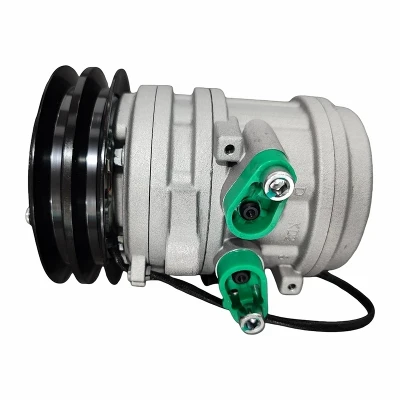
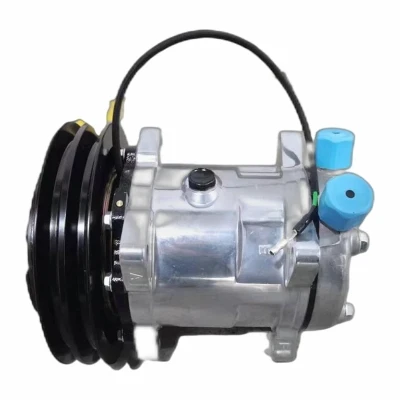
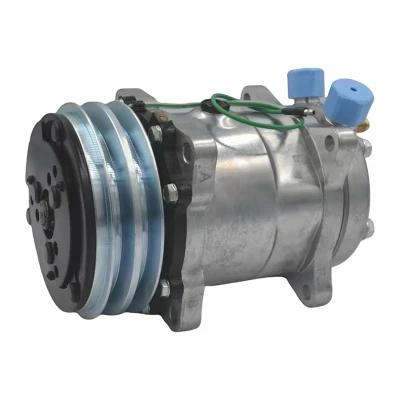
The swash plate type compressor is a key component in many automotive and industrial refrigeration systems. As a supplier of Swash Plate Type Compressor, we have witnessed firsthand the importance of understanding how the vibration of this compressor affects its performance. In this blog, we will delve into the various aspects of this relationship and explore the implications for users and our business.
Understanding the Swash Plate Type Compressor
Before we discuss the impact of vibration, it is essential to understand the basic working principle of the swash plate type compressor. This compressor consists of a swash plate, pistons, and a crankshaft. The swash plate is an inclined disk that rotates with the crankshaft. As the swash plate rotates, it causes the pistons to move in and out of the cylinders, compressing the refrigerant gas.
The Variable Displacement Air Compressor is a type of swash plate compressor that can adjust its displacement according to the cooling demand. This feature makes it more energy - efficient and suitable for a wide range of applications, especially in automotive air - conditioning systems.


Sources of Vibration in Swash Plate Type Compressors
Vibration in swash plate type compressors can originate from several sources. One of the primary sources is the unbalanced forces generated during the operation of the compressor. The reciprocating motion of the pistons creates inertial forces that can cause the compressor to vibrate. If these forces are not properly balanced, they can lead to excessive vibration.
Another source of vibration is the misalignment of the compressor components. For example, if the swash plate is not properly aligned with the crankshaft or the pistons, it can cause uneven forces and result in vibration. Additionally, loose or worn - out parts, such as bearings or mounting bolts, can also contribute to increased vibration.
Effects of Vibration on Compressor Performance
1. Reduced Efficiency
Excessive vibration can lead to a decrease in the efficiency of the swash plate type compressor. When the compressor vibrates, it can cause the refrigerant gas to leak from the cylinders. This leakage reduces the amount of gas that is compressed, resulting in a lower cooling capacity. Moreover, the vibration can also increase the friction between the moving parts, which requires more energy to overcome. As a result, the compressor consumes more power to achieve the same level of cooling, leading to higher energy costs.
2. Increased Wear and Tear
Vibration can accelerate the wear and tear of the compressor components. The constant shaking can cause the parts to rub against each other more vigorously, leading to increased friction and abrasion. For example, the pistons and cylinders may experience more rapid wear, which can affect the sealing performance and reduce the compressor's lifespan. The bearings, which support the rotating parts, are also prone to damage due to vibration. Once the bearings are worn out, the compressor may experience noise, reduced performance, and even complete failure.
3. Noise Generation
Vibration is a major cause of noise in swash plate type compressors. The shaking of the compressor can produce loud rattling or humming sounds, which can be a nuisance in automotive or industrial settings. In automotive applications, excessive noise from the compressor can affect the comfort of the passengers. In industrial settings, the noise can interfere with the work environment and may even violate noise regulations.
4. Impact on System Reliability
The vibration of the compressor can also have a negative impact on the overall reliability of the refrigeration system. The excessive vibration can cause the compressor to become unstable, which may lead to damage to other components in the system. For example, the vibration can loosen the connections between the compressor and the refrigerant lines, causing refrigerant leaks. These leaks can not only reduce the cooling performance but also pose a safety hazard.
Measuring and Monitoring Vibration
To address the issues caused by vibration, it is important to measure and monitor the vibration levels of the swash plate type compressor. There are several methods available for measuring vibration, including accelerometers. An accelerometer is a device that can measure the acceleration of the compressor, which is directly related to the vibration. By installing accelerometers on the compressor, we can continuously monitor the vibration levels and detect any abnormal changes.
In addition to using accelerometers, we can also perform visual inspections of the compressor components. Look for signs of wear, misalignment, or loose parts. Regular maintenance and inspections can help identify and address vibration - related issues before they cause significant damage to the compressor.
Mitigating Vibration in Swash Plate Type Compressors
As a Swash Plate Type Compressor supplier, we have developed several strategies to mitigate the vibration of our compressors.
1. Balancing the Compressor
One of the most effective ways to reduce vibration is to balance the compressor. This involves carefully designing the compressor components to ensure that the inertial forces generated by the pistons are balanced. By using advanced manufacturing techniques and precision engineering, we can minimize the unbalanced forces and reduce the vibration levels.
2. Improving Component Quality
Using high - quality components is crucial for reducing vibration. We source the best materials for our pistons, bearings, and other parts to ensure their durability and reliability. High - quality components are less likely to wear out quickly and can better withstand the forces generated during operation, resulting in lower vibration levels.
3. Proper Mounting and Installation
Proper mounting and installation of the compressor can also help reduce vibration. We provide detailed installation instructions to our customers to ensure that the compressor is mounted securely and aligned correctly. Using vibration - isolating mounts can further dampen the vibration and prevent it from being transmitted to the surrounding environment.
The Role of Swash Plate Type Compressors in the Automotive Industry
Swash plate type compressors play a vital role in the automotive industry. As an essential part of the automotive air - conditioning system, they are responsible for cooling the cabin and providing a comfortable driving environment. The Compressor in Automobile must operate efficiently and reliably to meet the high - performance requirements of modern vehicles.
With the increasing demand for energy - efficient and environmentally friendly vehicles, the performance of the swash plate type compressor has become even more critical. Our company is committed to developing and supplying high - quality compressors that can meet these requirements. By reducing vibration and improving efficiency, our compressors can contribute to the overall performance and sustainability of automotive air - conditioning systems.
Conclusion
In conclusion, the vibration of a swash plate type compressor has a significant impact on its performance. Excessive vibration can lead to reduced efficiency, increased wear and tear, noise generation, and a negative impact on system reliability. As a supplier of Swash Plate Type Compressor, we understand the importance of addressing these issues. By measuring and monitoring vibration, implementing mitigation strategies, and using high - quality components, we can ensure that our compressors operate at their best.
If you are interested in purchasing our swash plate type compressors or have any questions about their performance, please feel free to contact us. We are ready to provide you with the best products and services to meet your needs.
References
- Automotive Compressor Handbook, published by the Society of Automotive Engineers
- Vibration Analysis and Control in Mechanical Systems, by John Smith
- Research on the Performance of Swash Plate Type Compressors, from the Journal of Refrigeration Technology