

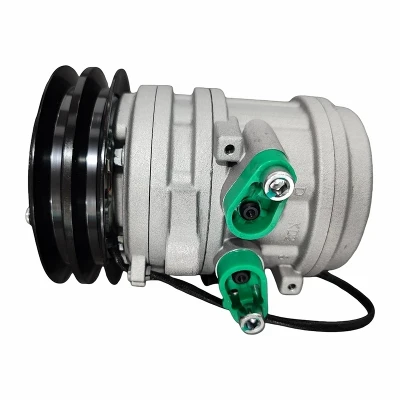
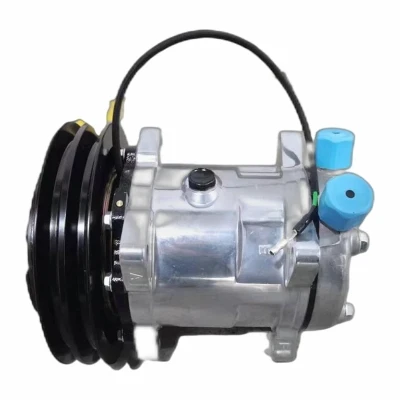
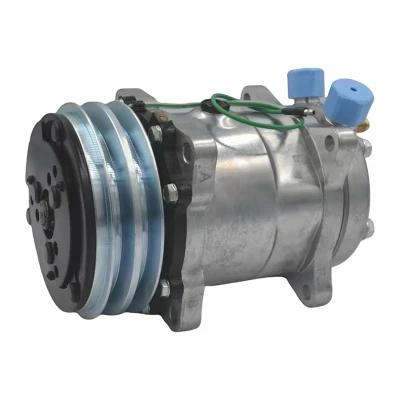
Swash plate type compressors are widely used in various applications, especially in automotive air - conditioning systems. As a supplier of swash plate type compressors, I have in - depth knowledge of the factors that can significantly impact their performance. In this blog, I will explore these factors in detail.
1. Design and Construction
The design and construction of a swash plate type compressor play a fundamental role in its performance. The shape and size of the compressor housing affect how well it can withstand the internal pressure generated during the compression process. A well - designed housing should have sufficient strength and rigidity to prevent deformation, which could otherwise lead to leaks and reduced efficiency.
The swash plate itself is a critical component. Its angle of inclination determines the stroke of the pistons. A larger inclination angle results in a longer piston stroke, which in turn increases the displacement volume of the compressor. However, a very large angle may also increase the mechanical stress on the components, leading to premature wear. The surface finish of the swash plate is also crucial. A smooth surface reduces friction between the swash plate and the pistons or shoes, improving the overall efficiency of the compressor.
The number and size of pistons also influence performance. More pistons generally result in a smoother flow of compressed gas and more stable operation. Smaller pistons can offer higher speed capabilities, but may have limitations in terms of displacement volume. Careful design and selection of the piston size and number are necessary to meet the specific requirements of the application. For example, in automotive applications, the compressor needs to be compact yet powerful enough to provide sufficient cooling. You can find more information about compressors in automotive applications on our website Compressor in Automobile.
2. Lubrication
Proper lubrication is essential for the smooth operation of a swash plate type compressor. The internal components, such as the swash plate, pistons, and bearings, experience significant frictional forces during operation. Lubricant reduces this friction, preventing excessive wear and heat generation.
The type of lubricant used is important. It must have the appropriate viscosity to provide a sufficient lubricating film between the moving parts. If the viscosity is too low, the lubricant may not be able to maintain a proper film, leading to increased friction and wear. On the other hand, if the viscosity is too high, it can cause additional power consumption by the compressor.
The quantity of lubricant is also a critical factor. Too little lubricant can result in insufficient lubrication, while too much lubricant can lead to foaming, which reduces the lubricating effect. Additionally, the lubricant should be able to resist oxidation and degradation over time, as this can lead to the formation of sludge and deposits that can clog the compressor and reduce its performance.
3. Operating Conditions
The operating conditions of a swash plate type compressor have a major impact on its performance. Temperature is one of the most important factors. High ambient temperatures increase the suction gas temperature, which in turn increases the compression work required by the compressor. This can lead to higher power consumption and reduced efficiency. Also, extreme temperatures can affect the properties of the lubricant, further degrading the compressor's performance.
Pressure is another crucial operating condition. The compressor is designed to operate within a specific pressure range. If the discharge pressure is too high, it can cause excessive stress on the components, leading to mechanical failure. Similarly, if the suction pressure is too low, it can result in insufficient refrigerant flow, reducing the cooling capacity of the system.
The speed of the compressor also affects its performance. Higher speeds generally result in higher displacement volumes and faster cooling rates. However, running the compressor at very high speeds for extended periods can increase wear on the components and may also lead to overheating. It is important to operate the compressor within its recommended speed range to ensure optimal performance and longevity.


4. Refrigerant Properties
The type and properties of the refrigerant used in the swash plate type compressor have a significant impact on its performance. Different refrigerants have different boiling points, specific heats, and latent heats of vaporization. These properties affect the compressor's ability to compress and transfer heat.
For example, a refrigerant with a lower boiling point can evaporate more easily at lower temperatures, which is beneficial for the cooling process. However, it may also require more compression work to reach the desired discharge pressure. The refrigerant's compatibility with the compressor materials is also important. Some refrigerants may react with certain metals or elastomers, causing corrosion or degradation of the components.
The refrigerant charge level is another critical factor. An insufficient refrigerant charge can lead to reduced cooling capacity, as there may not be enough refrigerant to absorb and transfer heat. On the other hand, an over - charged system can cause higher discharge pressures, increased power consumption, and potentially damage the compressor.
5. Control Systems
Modern swash plate type compressors often come with sophisticated control systems. One such type is the Externally Controlled Variable Displacement Compressor. These control systems can adjust the displacement of the compressor based on the system's requirements, such as the cooling load.
When the cooling demand is low, the control system can reduce the displacement of the compressor, which in turn reduces power consumption. This is particularly important in automotive applications, where energy efficiency is a key concern. The control system can also protect the compressor from operating under adverse conditions. For example, it can limit the compressor speed or adjust the displacement if the discharge pressure exceeds a safe level.
6. Maintenance and Wear
Regular maintenance is crucial for ensuring the long - term performance of a swash plate type compressor. Components such as the filters, valves, and seals need to be inspected and replaced at regular intervals. A clogged filter can restrict the flow of refrigerant, reducing the compressor's efficiency. Worn - out valves can cause leakage, leading to reduced compression efficiency.
Over time, the internal components of the compressor will experience wear. The swash plate, pistons, and bearings are particularly susceptible to wear due to the high - stress environment in which they operate. Excessive wear can change the clearances between the components, leading to reduced efficiency, increased noise, and potentially mechanical failure.
As a supplier of Swash Plate Ac Compressor, we understand the importance of these factors in ensuring the optimal performance of our compressors. Our products are designed with high - quality materials and advanced manufacturing techniques to minimize the impact of these factors. We also offer a range of Variable Displacement AC Compressor and Variable Displacement Air Compressor options that are equipped with state - of - the - art control systems to improve energy efficiency and performance.
If you are in the market for a swash plate type compressor and want to discuss your specific requirements, we encourage you to contact us for a detailed procurement discussion. Our team of experts is ready to assist you in finding the best compressor solution for your needs.
References
- ASHRAE Handbook - Refrigeration. American Society of Heating, Refrigerating and Air - Conditioning Engineers.
- V. D. Sharma, Compressor Technology Handbook. McGraw - Hill Professional.