

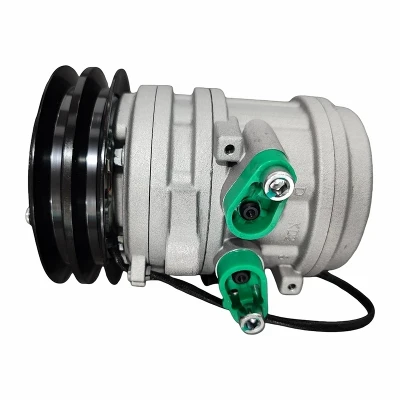
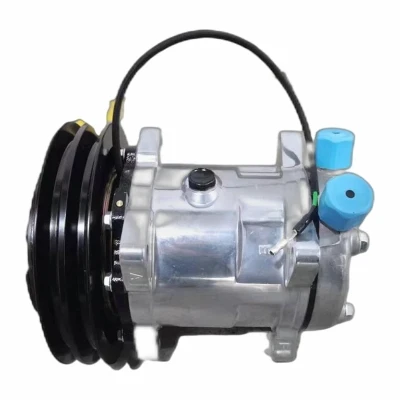
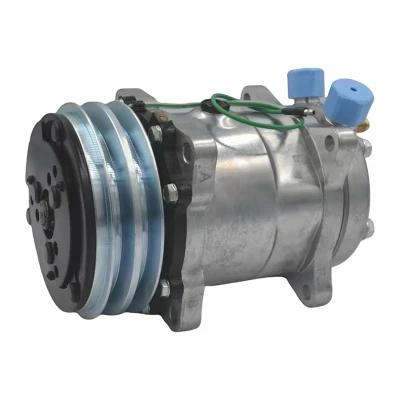
Hey there! As a supplier of loader compressors, I often get asked about how these nifty machines work. So, I thought I'd break it down for you in this blog post.
Let's start with the basics. A loader compressor is a crucial part of many construction and engineering vehicles. It's responsible for compressing air, which is then used for various functions, like powering pneumatic tools, controlling brakes, and even for the refrigeration systems in some vehicles.
The Basic Components of a Loader Compressor
Before we dive into the working principle, it's important to know what makes up a loader compressor. The main components typically include a piston, a cylinder, a valve, and a crankshaft.
The piston is a cylindrical piece that moves up and down inside the cylinder. The cylinder is a closed chamber where the air is compressed. The valves control the flow of air in and out of the cylinder, and the crankshaft converts the linear motion of the piston into rotary motion.
How Does It Work?
The working principle of a loader compressor is based on the concept of reducing the volume of air to increase its pressure. It works in a cycle, which can be divided into four main stages: intake, compression, discharge, and expansion.
Intake Stroke
The cycle starts with the intake stroke. The piston moves downward inside the cylinder, creating a vacuum. This vacuum pulls air into the cylinder through the intake valve. The air then fills the space above the piston.
Compression Stroke
Once the cylinder is filled with air, the piston starts moving upward. As it does, the intake valve closes to prevent the air from escaping. The upward movement of the piston reduces the volume of the air in the cylinder, which in turn increases its pressure. This is the compression stage.
Discharge Stroke
When the air pressure inside the cylinder reaches a certain level, the discharge valve opens. The high-pressure air is then forced out of the cylinder and into the storage tank or directly to the equipment that needs it, such as pneumatic tools.
Expansion Stroke
After the discharge of the compressed air, the piston moves back down. This is the expansion stroke. During this stage, the discharge valve closes, and the intake valve prepares to open again for the next cycle.
Types of Loader Compressors
There are different types of loader compressors, each with its own working principle variations. The most common types are reciprocating compressors and rotary screw compressors.
Reciprocating Compressors
Reciprocating compressors, like the ones I mentioned earlier with pistons and cylinders, are the traditional type. They are known for their high efficiency at low to medium pressures. They work well in applications where intermittent air supply is needed, such as small construction sites.
Rotary Screw Compressors
Rotary screw compressors use two interlocking screws to compress the air. As the screws rotate, the air is trapped between them and gradually compressed as it moves along the screw threads. These compressors are more suitable for continuous operation and can handle higher volumes of air.


Applications of Loader Compressors
Loader compressors have a wide range of applications in the construction and engineering industries. Here are some common uses:
- Pneumatic Tools: Compressed air is used to power tools like jackhammers, nail guns, and air wrenches. These tools are essential for tasks like breaking concrete, fastening materials, and tightening bolts.
- Braking Systems: In some construction vehicles, compressed air is used to operate the braking systems. It provides the necessary force to engage and disengage the brakes quickly and effectively.
- Refrigeration Systems: Some loader compressors are used in Engineering Vehicle Refrigeration Compressor applications. They help in cooling the cabin or storage areas of the vehicles.
- Construction Machinery: Other types of construction machinery, such as excavators and loaders, also rely on compressed air for various functions. For more information on this, check out Construction Machinery Compressor.
- Construction Engineering: In large construction projects, Construction Engineering Compressor are used to power multiple tools and equipment simultaneously.
Why Choose Our Loader Compressors?
As a supplier, I'm proud to say that our loader compressors are designed with quality and reliability in mind. We use the latest technology and high-quality materials to ensure that our compressors can withstand the tough conditions of construction sites.
Our compressors are energy-efficient, which means you'll save on operational costs in the long run. They also require minimal maintenance, so you can focus on your work without worrying about frequent breakdowns.
Whether you need a compressor for a small excavator or a large construction project, we have a wide range of options to choose from. For example, our Excavator Compressor is specifically designed to meet the needs of excavators, providing reliable performance and durability.
We also offer Construction Machinery Equipment Compressor that are suitable for various types of construction machinery. These compressors are built to last and can handle the demanding requirements of the industry.
Contact Us for Your Compressor Needs
If you're in the market for a loader compressor, don't hesitate to reach out. We're here to help you find the right compressor for your specific needs. Whether you have questions about the working principle, the different types available, or need advice on which compressor is best for your project, our team of experts is ready to assist you.
Let's get your construction and engineering projects running smoothly with our high-quality loader compressors. Contact us today to discuss your requirements and start the procurement process.
References
- Compressor Handbook: A Guide to Compressor Technology and Applications
- Construction Machinery Maintenance and Operation Manuals