

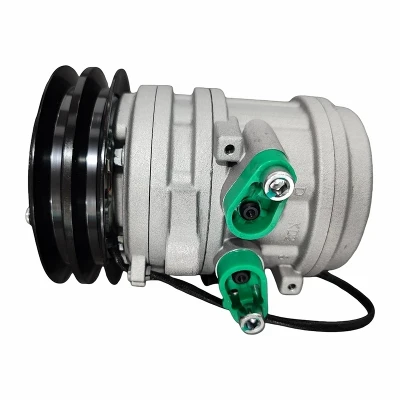
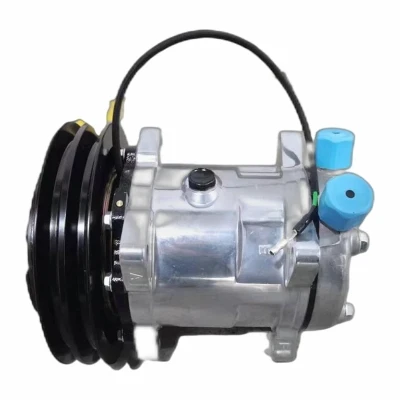
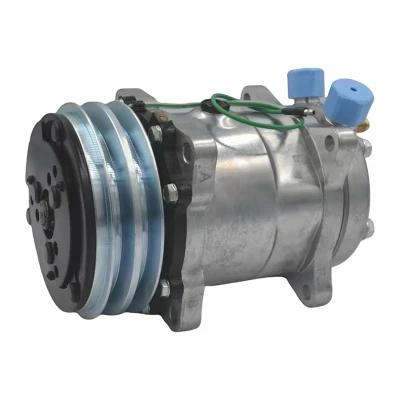
Hey there! As a supplier of Fixed Displacement Compressors, I often get asked about how long these bad boys last. So, let's dive right into it and figure out what the lifespan of a fixed displacement compressor really is.
First off, what the heck is a fixed displacement compressor? Well, it's a type of compressor that moves a set amount of refrigerant with each rotation. Unlike variable displacement compressors, which can adjust the amount of refrigerant they move based on the system's needs, fixed displacement compressors keep chugging along at a constant rate. You can learn more about them here Fixed Displacement Compressor.
Now, onto the lifespan. The lifespan of a fixed displacement compressor can vary widely depending on a bunch of factors. One of the biggest factors is how often it's used. If you've got a compressor in a commercial setting that runs 24/7, it's going to wear out a lot faster than one in a residential system that only kicks on occasionally.
Another important factor is the quality of maintenance. Just like your car, a compressor needs regular check - ups and tune - ups to keep running smoothly. If you neglect maintenance, things like dirty filters, low refrigerant levels, or worn - out parts can cause the compressor to work harder than it should, which can significantly shorten its lifespan.
The environment in which the compressor operates also plays a huge role. Compressors that are exposed to extreme temperatures, high humidity, or a lot of dust and debris are going to face more wear and tear. For example, a compressor in a hot and dusty industrial area might not last as long as one in a clean, climate - controlled environment.
On average, a well - maintained fixed displacement compressor can last anywhere from 10 to 15 years. But that's just a ballpark figure. Some compressors might last 20 years or more, while others could give up the ghost after just 5 years.
Let's talk about some of the signs that your fixed displacement compressor might be on its last legs. One of the most obvious signs is strange noises. If you start hearing rattling, grinding, or screeching sounds coming from your compressor, it's a pretty good indication that something's wrong. This could be due to worn - out bearings, loose parts, or other mechanical issues.
Another sign is a decrease in performance. If your air conditioning or refrigeration system isn't cooling as well as it used to, or if it's taking longer to reach the desired temperature, the compressor might be to blame. This could be because the compressor is losing its ability to compress the refrigerant effectively.
Leaks are also a major red flag. Refrigerant leaks not only reduce the efficiency of your system but can also cause damage to the compressor over time. If you notice any signs of refrigerant leakage, such as a hissing sound or frost on the compressor, you should get it checked out right away.
Now, if you're in the market for a new fixed displacement compressor, there are a few things you should keep in mind. First, make sure you choose a compressor that's the right size for your system. An undersized compressor will have to work harder to meet the demands of your system, which can lead to premature failure. On the other hand, an oversized compressor can cycle on and off too frequently, which can also cause problems.
You should also look for a compressor from a reputable manufacturer. A high - quality compressor is more likely to have a longer lifespan and better performance. And don't forget about the warranty. A good warranty can give you peace of mind and protect you in case something goes wrong.
In the automotive world, fixed displacement compressors are commonly used. You can read more about compressors in automobiles here Compressor in Automobile. One type of fixed displacement compressor used in cars is the swash plate AC compressor. These compressors use a swash plate mechanism to convert the rotational motion of the engine into the reciprocating motion needed to compress the refrigerant. Check out more about them Swash Plate Ac Compressor.
Of course, there are also variable displacement compressors out there. Variable displacement air compressors and variable displacement AC compressors can adjust their output based on the system's needs, which can lead to better energy efficiency. You can learn more about them here Variable Displacement Air Compressor and Variable Displacement AC Compressor.
If you're thinking about purchasing a fixed displacement compressor, I'd love to chat with you. We've got a wide range of high - quality compressors that are built to last. Whether you need a compressor for your home, business, or automotive application, we've got you covered. Don't hesitate to reach out for more information and to start the procurement process.


References:
- HVAC industry standards and best practices documents
- Compressor manufacturer's technical manuals
- Automotive engineering textbooks